Hair Wellness Lab Presents

Natural Girlies Magazine

About the Magazine

Natural Girlies Magazine is the editorial home of Hair Wellness Lab — a digital magazine where the science of healthy hair meets the culture of the crown, made for women with textured, curly, coily, and kinky hair.

Natural Girlies Magazine exists to make hair wellness feel clear, joyful, and doable. Every issue blends education and culture: practical guidance on scalp health, moisture, and protective styles alongside stories about identity, confidence, and community. Instead of treating natural hair care as a problem to manage, the magazine treats your hair as a living crown worth nourishing — and gives you the knowledge to care for it with intention.

Who Natural Girlies Magazine Is For

This magazine is for anyone learning to love and care for textured hair — whether you are years into your natural hair journey or just big-chopped last week. It speaks to curly, coily, and kinky hair of every pattern, and to readers who want more than quick tips: real hair education rooted in scalp health, moisture science, and healthy hair habits. If you have ever felt overwhelmed by conflicting advice, Natural Girlies is built to be your steady, trustworthy source.

What Readers Can Expect

Each edition is designed to teach something you can actually use. Across our issues and monthly blogs, you'll find:

  • Scalp health education — how to cleanse, balance, and care for the foundation your hair grows from.
  • Moisture and natural hair care guidance for curly, coily, and kinky textures.
  • Protective styles done well — braids and twists that protect length instead of stressing your edges.
  • Hair growth and retention strategies that focus on keeping the length you grow.
  • Crown culture and confidence — the identity and community side of textured hair.
  • Healthy hair habits you can build into a routine that lasts.

You can read the latest digital edition below, browse every past issue in the Natural Girlies issue archive, go deeper in our cornerstone guide on what hair wellness really means, or explore the science-backed lessons in the Hair Knowledge Library.

Why Hair Wellness & Scalp Health Matter

Hair wellness matters because textured hair is uniquely beautiful and uniquely vulnerable. Its coils make it naturally drier and more prone to breakage, so the habits you repeat — how you moisturize, how you cleanse your scalp, how gently you handle your strands — determine whether your hair thrives or struggles. Treating hair care as wellness means thinking in seasons and systems, not single products or one-off fixes.

Scalp health matters most of all, because every strand begins life at a follicle in your scalp. A scalp clogged with build-up, chronically dry, or inflamed makes it hard for hair to grow and stay anchored. That is why so much of our education starts at the root — you can assess yours with the scalp health check — and why understanding your hair's porosity changes which products and techniques will actually work for you.

How Protective Styles Fit Into a Healthy Routine

Protective styles are one of the most powerful tools in textured hair wellness. By tucking fragile ends away and reducing daily manipulation, braids, twists, and locs help you retain the length you grow. But a protective style only protects when it is installed with low tension and when the scalp underneath is still cleansed and moisturized. Natural Girlies treats protective styling as part of care, never a pause from it — and the magazine's seasonal issues show how to adapt that care to summer heat, winter dryness, and everything between.

Culture, Science, Education & Wellness — Together

What makes Natural Girlies different is that it refuses to separate the science from the culture. A feature on scalp health sits beside a story about wearing your natural hair with pride; a guide to moisture retention shares pages with a conversation about identity and representation. Because it lives inside the Hair Wellness Lab ecosystem, every article connects to tools you can use — from the Lab to growth tracking and routine support. That blend of culture, science, education, and wellness is the whole point: a healthier crown, grown with knowledge and worn with pride.
Read the Latest
Natural Girlies Issue

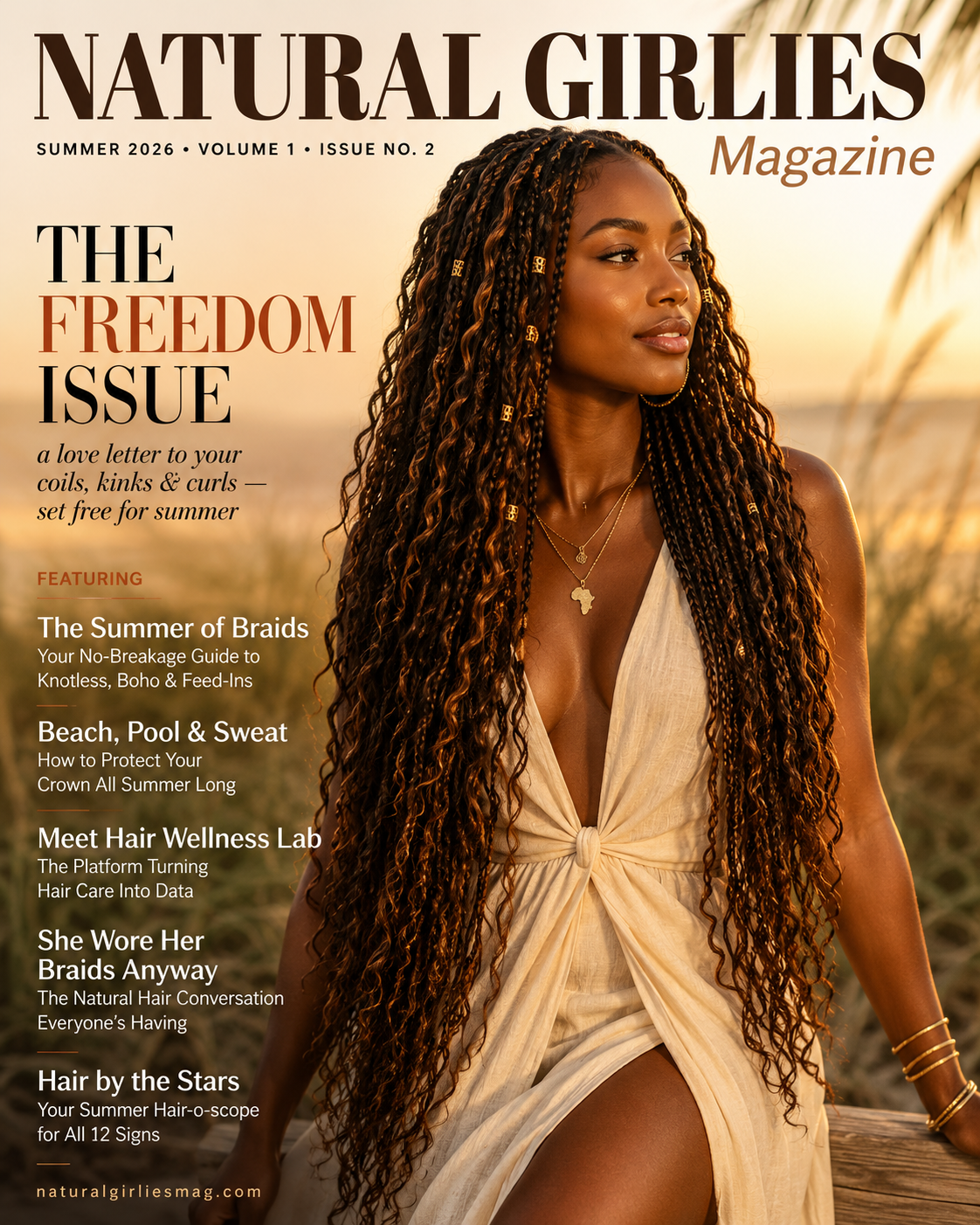
Summer 2026The Freedom Issue

Summer 2026, Volume 1 Issue No. 2. Protective braids without breakage, beach-and-pool crown protection, textured hair wellness, and crown culture for the season of freedom.

Topics Covered In This Issue

  • Protective Style Care
  • Seasonal Hair Care
  • Scalp Health Education
  • Hair Wellness Habits
  • Crown Culture
  • Textured Hair Wellness

See everything inside this issue →

Having trouble viewing? Open full screen.

Crown Archives:
Previous Issues

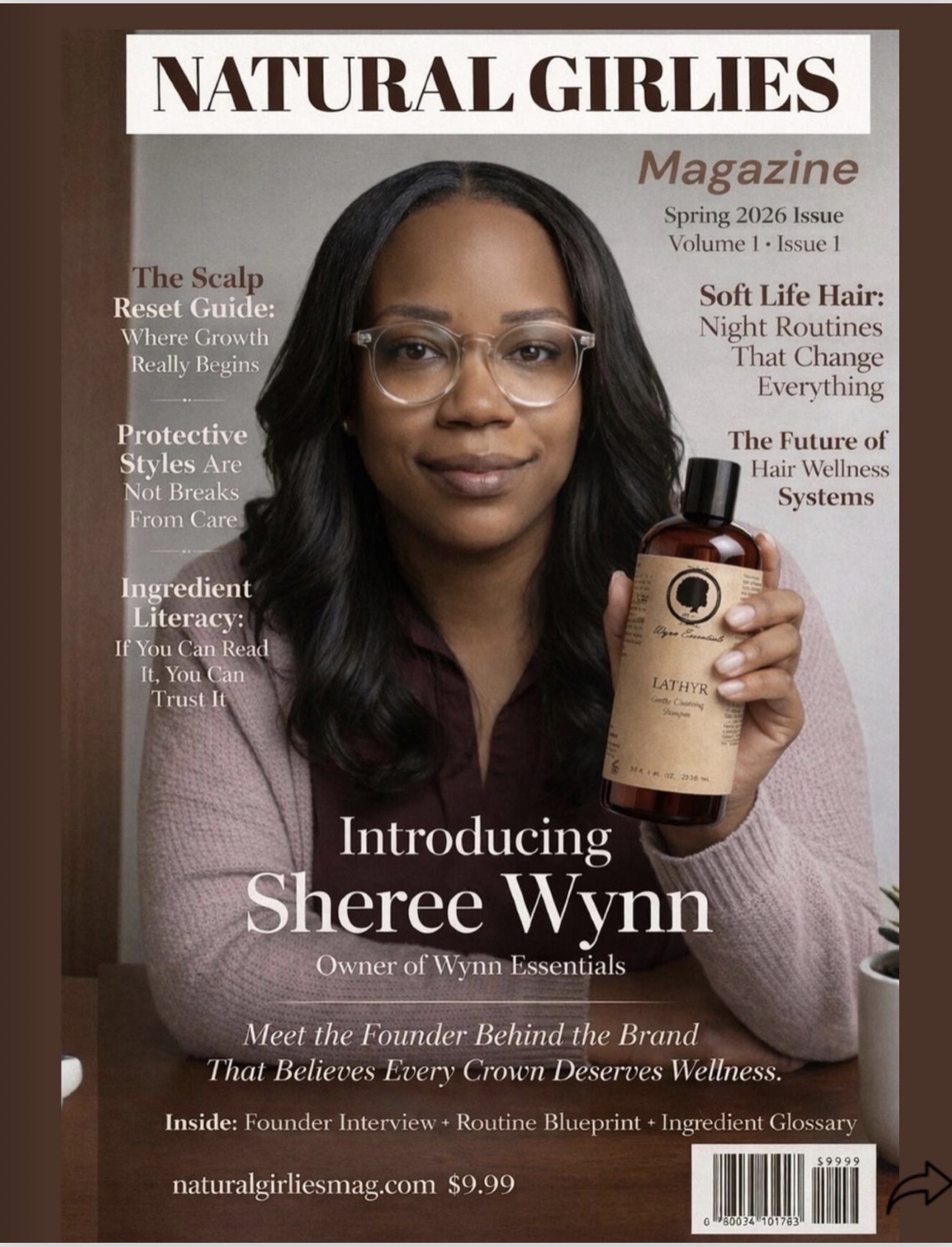
Natural Girlies Magazine Spring 2026 cover — the debut Hair Wellness Edition celebrating textured hair, scalp health, and crown care

Spring 2026 · Volume 1 · Issue No. 1 · March 2026

The Hair Wellness Edition

Spring 2026, Volume 1 Issue No. 1. The debut edition exploring scalp resets, soft-life night routines, ingredient literacy, and protective styling as part of a healthy hair routine.

Topics Covered In This Issue

  • Scalp Health Education
  • Hair Wellness Habits
  • Natural Hair Care
  • Protective Style Care
  • Hair Growth Strategies
Read Issue

Crown Archives

Hair Wellness FAQ

What is hair wellness?

Hair wellness is the practice of caring for your hair and scalp as part of your overall health — consistently and gently — rather than chasing trends. It focuses on scalp health, moisture balance, low-manipulation styling, and the repeatable healthy hair habits that build a thriving crown over time.

How often should textured hair be washed?

Most curly, coily, and kinky hair does well washing every 5 to 10 days, but the right rhythm depends on your scalp, products, activity level, and styles. The goal is a balanced scalp — cleansed enough to avoid build-up, but not so often that it is stripped and dry. Clarify periodically to reset build-up.

Do protective styles help hair grow?

Protective styles like braids, twists, and locs do not speed up growth, but they help you keep the length you grow by reducing daily friction and breakage. They only protect when installed with low tension and when the scalp underneath is still cleansed and moisturized. Worn too tight or too long, they can cause damage.

How can I maintain scalp health?

Cleanse on a schedule that keeps your scalp balanced, clarify periodically to clear product build-up, moisturize when the scalp feels tight or itchy, and stimulate circulation with gentle massage. Because every strand grows from a follicle, a clean, balanced, well-circulated scalp is the foundation of healthy hair.

Why is moisture important for natural hair?

Textured hair is naturally drier because its coils make it harder for scalp oils to travel down the strand. Without enough moisture, hair becomes brittle and snaps. Retaining moisture — layering water-based hydration and sealing it in — keeps strands flexible and is one of the biggest factors in preventing breakage.

What causes hair breakage?

Most breakage comes from a moisture or strength imbalance, plus mechanical stress. Hair that is too dry becomes brittle, while hair that is over-moisturized without protein becomes weak and mushy. Heat, rough detangling, tight styles, and worn ends all add to it. Balancing moisture and protein and handling hair gently prevents most breakage.

How can I build a healthy hair routine?

Start with a few high-impact habits you can actually keep: cleanse the scalp on a rhythm, hydrate and seal, balance moisture with occasional protein, protect your ends, minimize heat, and trim damage early. Consistency matters far more than the number of products — sustainable habits compound into real results.

What is the difference between hair growth and hair retention?

Growth happens at the scalp — most people grow about half an inch per month regardless of product. Retention is whether that new growth survives at the ends instead of breaking off. Visible length is growth minus breakage, so protecting your ends and retaining length matters more than chasing growth hacks.

How often should I moisturize my hair?

Many people moisturize every 1 to 3 days, but it depends on your hair's porosity and how quickly it loses water. High-porosity hair tends to need moisture more often, while low-porosity hair holds it longer and can be weighed down. Let how your hair feels — tight and dry versus soft and pliable — guide the frequency.

Why is crown care important?

Hair wellness is never only physical. For Black women especially, hair carries identity, history, and emotion — which is why we call it crown care. Confidence in your natural texture, community, and self-acceptance are part of a healthy relationship with your hair, alongside the science of scalp health and moisture.

Continue Exploring

Continue your crown journey

Built for the crown you actually have.

Hair Wellness Lab connects routines, products, growth tracking, education, and community in one textured hair wellness space.

Back to the Lab →